
Legal clarity for a digital world.
Advisory shaped by 18 years of technology experience. Guiding individuals and businesses through cyber law, data protection, corporate compliance and estate planning under Indian law.
18+
Years in Technology
3
Core Practice Areas
DPDP
Published Author

Where technology expertise meets legal precision.
This isn't a traditional legal practice. With 18 years in information technology before entering law, Advocate Joginder Poswal brings a rare combination of technical depth and legal knowledge to every engagement.
Whether it's assessing a data breach under the DPDP Act, drafting commercial contracts for tech startups, or planning cross-border estate succession — the advisory is always grounded in practical, real-world understanding.
Core Principles
Legal advice should be understandable, actionable and free of unnecessary jargon.
Every recommendation is anchored to the relevant Indian statutes and regulatory frameworks.
All consultations are confidential. This practice does not solicit work or guarantee outcomes.
Deep IT background means advice that considers real-world digital operations and risks.
Focused advisory across three
specialised domains.
Each practice area combines legal knowledge with practical technology understanding to provide advice that is both legally sound and operationally relevant.
Cyber Law & Data Protection
Comprehensive advisory on cybercrime response, digital fraud, DPDP Act 2023 compliance, privacy policies, data breach protocols and IT Act 2000 obligations. Whether you're a startup handling user data or an individual dealing with digital fraud — get clear, statute-backed guidance on your rights and responsibilities.
Explore Cyber Law AdvisoryDPDP Compliance
Specialised assessment of data collection, processing and retention under India's Digital Personal Data Protection Act, 2023. Practical compliance pathways for product teams and founders.
DPDP Advisory DetailsCorporate & Commercial Law
Drafting, review and advisory for commercial contracts, NDAs, corporate compliance under the Companies Act, governance for startups and SMEs, and legal review of business arrangements.
Corporate Law ServicesInheritance, Wills & Estate Planning
Will drafting and review, succession planning, estate distribution advisory, NRI cross-border asset considerations, and documentation for family wealth transfer. Sensitive, methodical guidance that protects family interests and respects the provisions of Indian succession law.
Estate Planning AdvisoryA clear, structured advisory process.
Every engagement follows a disciplined workflow designed to give you accurate, compliant and practical legal guidance.
Initial Enquiry
Reach out via the contact form, WhatsApp or email. Briefly describe your legal question or requirement so we can assess the scope.
Scope & Review
We review the relevant facts, documents and applicable laws. This step identifies the exact legal issues and determines the advisory approach.
Advisory & Documentation
You receive clear, written advice — whether it's a compliance review, contract draft, succession plan or policy document — grounded in Indian statute.
Follow-Up Support
Questions after delivery? Follow-up clarification ensures you understand the advice and can act on it with confidence.
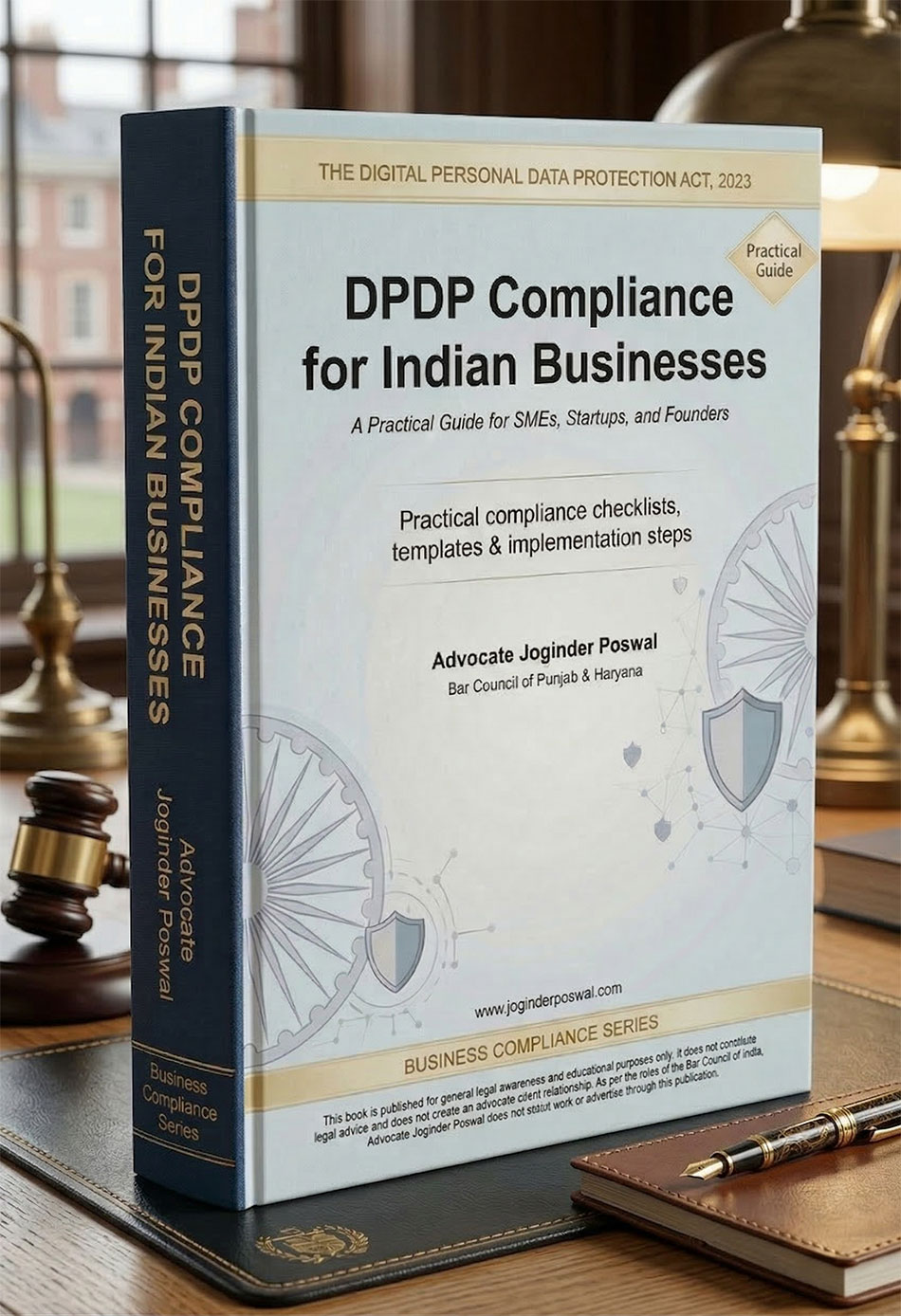
DPDP Compliance for Indian Businesses
A practical guide that explains how Indian businesses, startups and founders can comply with the Digital Personal Data Protection Act, 2023. From understanding consent mechanisms and data principal rights to building breach response protocols — this book bridges the gap between legal obligations and real-world implementation.
Written for compliance teams, product managers, founders and legal professionals who need clear, actionable DPDP guidance without the legalese.
Legal advisory for people who need answers, not ambiguity.
Whether you're an entrepreneur launching a tech product, a family planning succession, or an NRI managing assets in India — this practice is designed for clients who value clarity, precision and practical outcomes over traditional legal theatre.
DPDP compliance, privacy policies, contracts and governance from day one.
Corporate compliance, vendor agreements and regulatory advisory for growing companies.
Will drafting, estate planning and succession advisory that protects family interests.
Cross-border asset advisory, Indian property matters and succession planning from abroad.
Answers before you even ask.
Understanding what to expect makes the first step easier. Here are the questions most people ask before reaching out.
This practice provides advisory, consultation, drafting and compliance services. It does not involve representing clients in court proceedings. The focus is on preventing issues, ensuring compliance and providing clear documentation — not on courtroom litigation.
Three core areas: Cyber Law & Data Protection (including DPDP Act 2023 compliance), Corporate & Commercial Law (contracts, governance, Companies Act), and Inheritance, Wills & Estate Planning (succession, will drafting, NRI advisory).
With 18+ years in IT before entering law, Advocate Poswal understands technical systems, data flows, digital operations and technology risks. This is especially valuable for cyber law, DPDP compliance and advising tech-driven businesses where legal issues often have a technical dimension.
Yes. NRIs seeking succession planning, estate advisory or guidance on Indian property matters can engage these services remotely. Consultations can be conducted over video call, WhatsApp or email.
No. Simply reaching out or browsing this website does not establish an advocate-client relationship. A professional engagement begins only after a mutual review of facts, formal acceptance and agreement on scope.
Enrolment: Bar Council of Punjab & Haryana | No.: PH/9616/2023
As per Bar Council of India rules, no work is solicited through this website. The information provided is for general guidance and does not constitute legal advice or create an advocate-client relationship.